Plant & Lawn Care · March 12, 2025
Best Low-Water Plants for Coastal Yards in Newport Beach (Zone 10a Guide)
Updated May 30, 2026
A practical guide to drought-tolerant, salt-tolerant plants that thrive in Newport Beach’s coastal Zone 10a climate — and look beautiful doing it.
AI-generated audio summary. For the full detail, read on.
Why Zone 10a changes everything
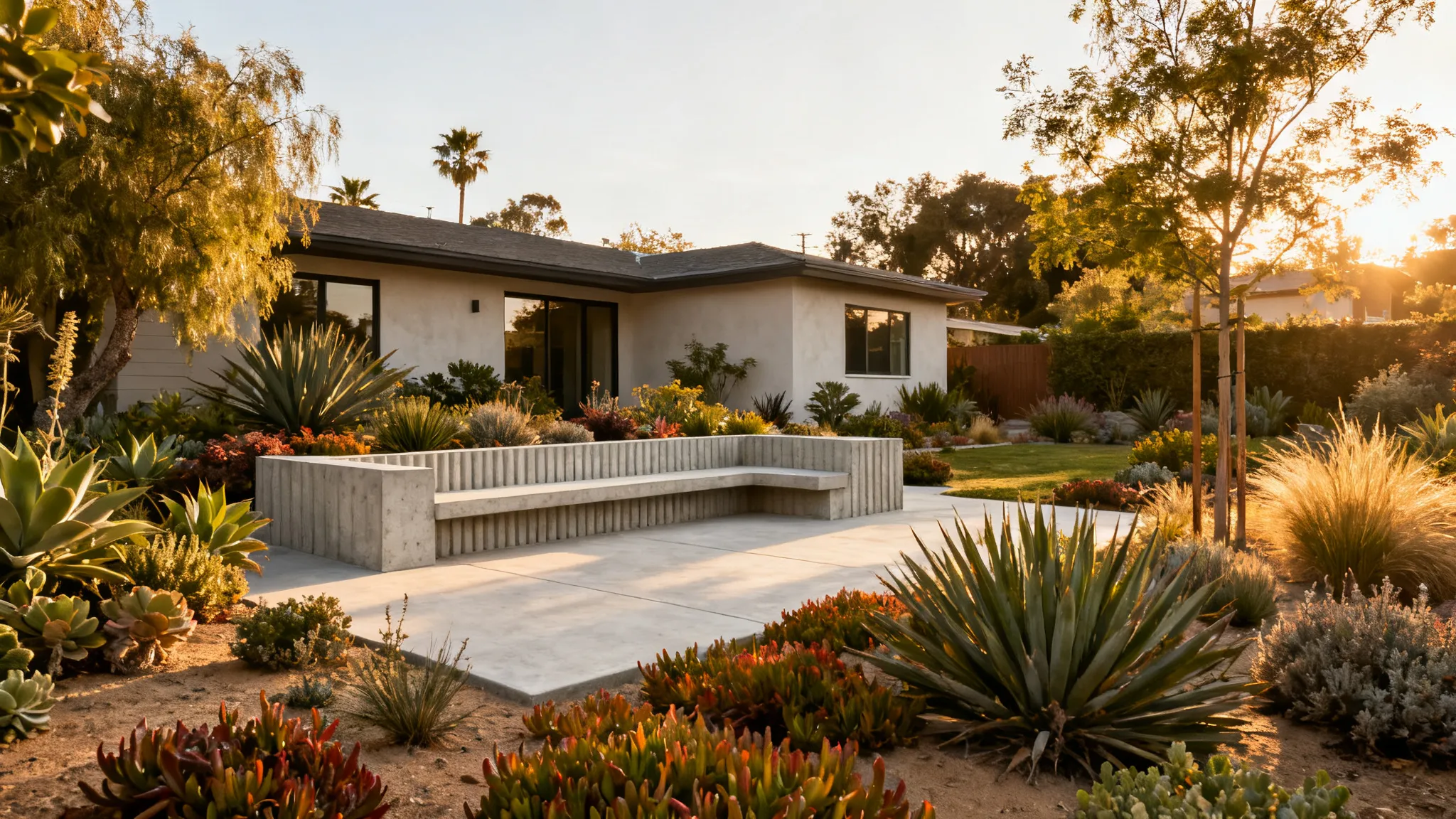
Newport Beach sits in USDA Zone 10a — a mild, frost-free coastal climate with sandy soils, salt air, and long dry stretches. That combination rules out a lot of thirsty mainland favorites but opens the door to a huge palette of low-water plants that stay lush on very little irrigation. The trick is choosing plants suited to coastal conditions from the start.
Structure: agaves, aloes & succulents
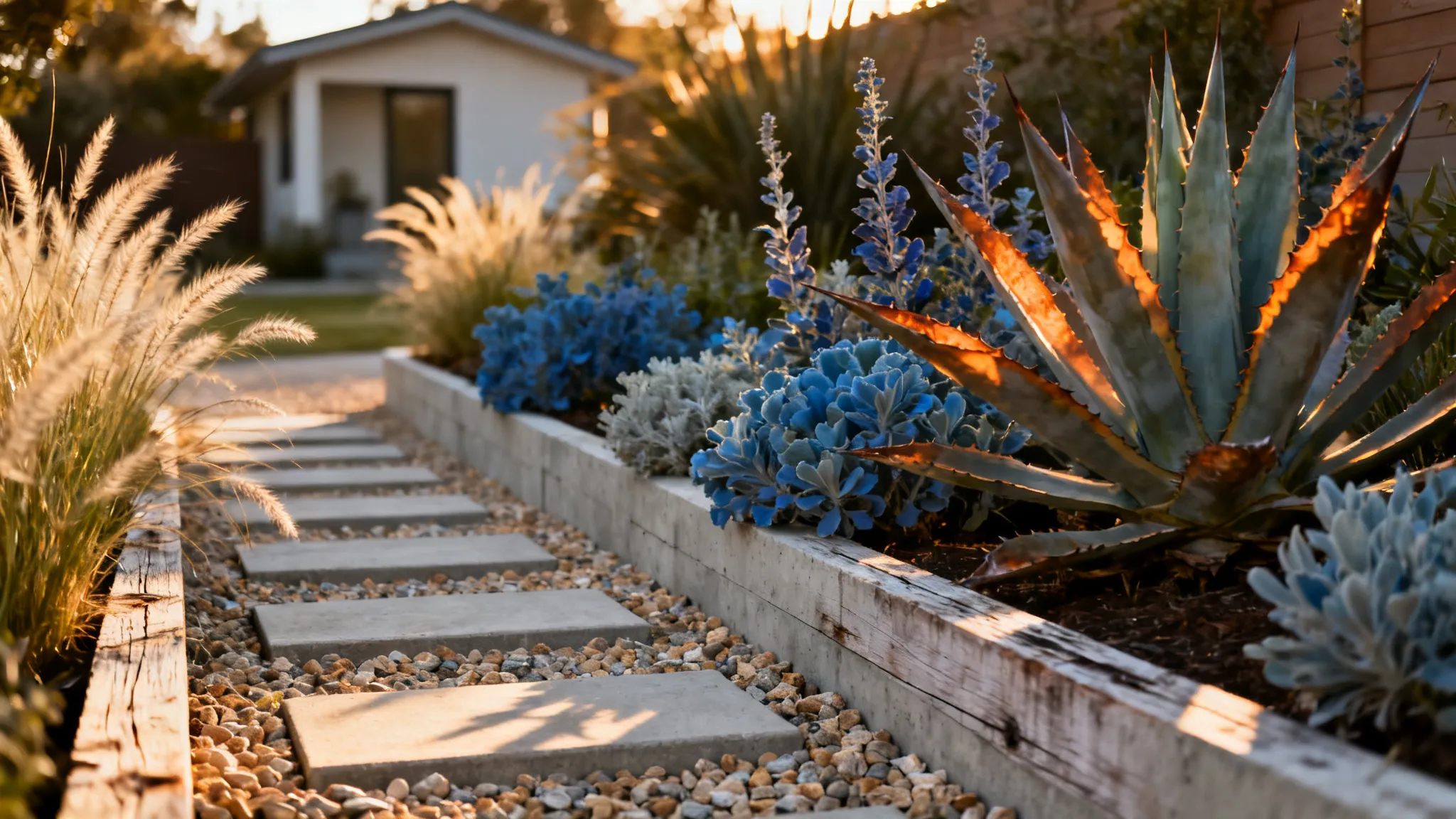
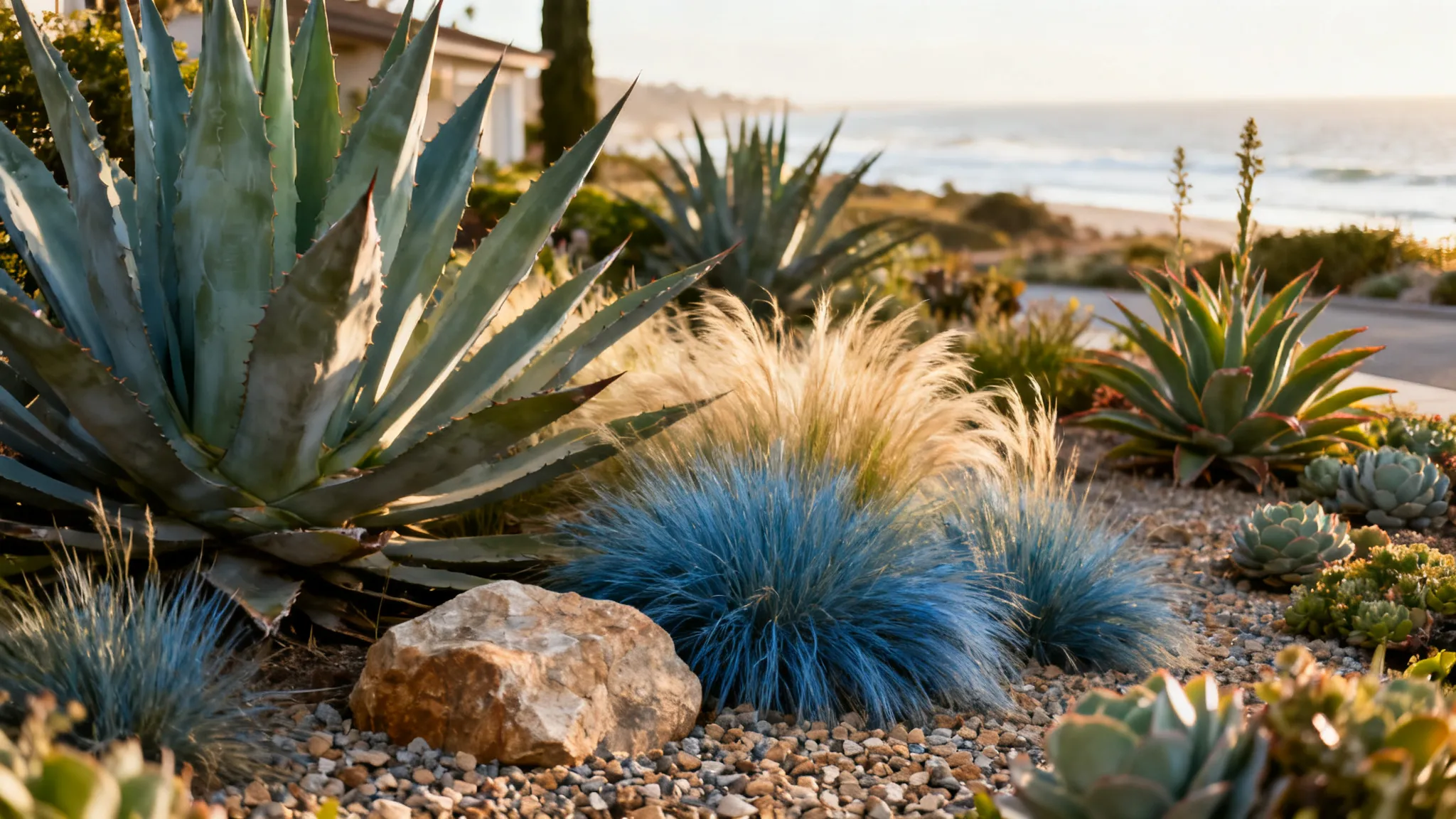
For architectural form and year-round presence, succulents are hard to beat. Agaves, aloes, and the bold rosettes of echeveria and senecio bring sculptural shape, store their own water, and shrug off salt air. They anchor a low-water design and look intentional in every season.
Color: salvias, lavender & rockrose
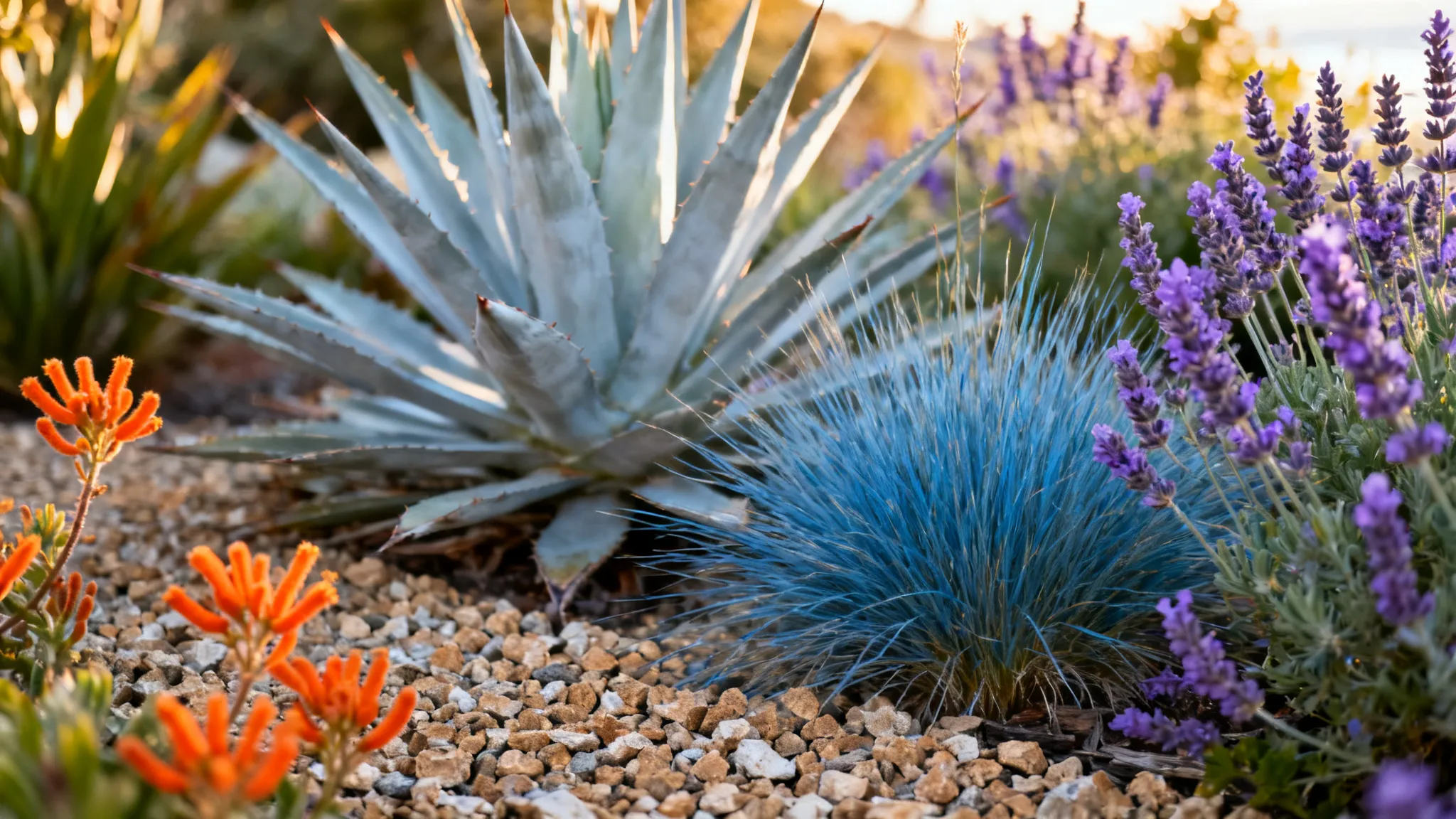
For months of bloom on minimal water, lean on Mediterranean and California-friendly choices: salvias, lavender, rockrose (cistus), and kangaroo paw. They attract pollinators, tolerate the coast, and deliver the color that keeps a drought-tolerant yard from looking sparse.
Native backbone: ceanothus & manzanita
California natives like Ceanothus (California lilac) and manzanita are built for our conditions — once established they need almost no supplemental water, support local wildlife, and give a garden a real sense of place. They make an excellent evergreen backbone for a coastal design.
Groundcovers instead of thirsty lawn
Replace high-water turf with low-growing, walkable groundcovers such as creeping thyme, dymondia, or trailing rosemary. They knit the design together, suppress weeds, and use a fraction of the water — or pair them with a clean synthetic turf lawn where you still want green underfoot.
Set them up to thrive
Even drought-tolerant plants establish best with good design: group plants by water need, improve and mulch the soil, and run efficient drip irrigation on a smart controller for the first year or two. Do that, and a coastal Newport Beach garden looks great on a fraction of the water. We design and plant water-wise landscapes like this across Orange County — reach out for a free consultation.
Watch & Learn
Drought-Tolerant Plants for Full Sun
A clear explainer on the subject, from John & Bob’s.
Frequently asked questions
What are the best low-water plants for coastal Newport Beach?
Succulents like agave and aloe for structure; salvias, lavender, and rockrose for color; California natives such as ceanothus and manzanita for an evergreen backbone; and low-water groundcovers in place of thirsty lawn. All thrive in our Zone 10a coastal climate on little water.
Do native plants really use less water?
Yes. The EPA notes that regionally native plants are adapted to the local climate and soil, so once established they need less supplemental water and fertilizer than non-natives — which makes them the efficient backbone of a coastal garden.
Can a low-water garden still look lush and colorful?
Absolutely. Layering succulents, flowering perennials, grasses, and groundcovers gives year-round structure and months of bloom — often richer-looking than a plain lawn, on a fraction of the water.
How do I keep new low-water plants alive while they establish?
Most water is needed in the first year while roots establish. Improve and mulch the soil, run drip irrigation, and water deeply but infrequently; after establishment a good palette needs very little.
Have a project in mind?
Get a free, no-obligation consultation with the All Seasons team.