Design & Ideas · May 30, 2026
Drought-Tolerant Landscaping in Orange County: A Complete Guide
Updated May 30, 2026
How to design a drought-tolerant landscape that thrives in Orange County — the plants, the irrigation, and the design moves that keep a yard lush on a fraction of the water.
AI-generated audio summary. For the full detail, read on.
Why drought-tolerant design wins in Orange County
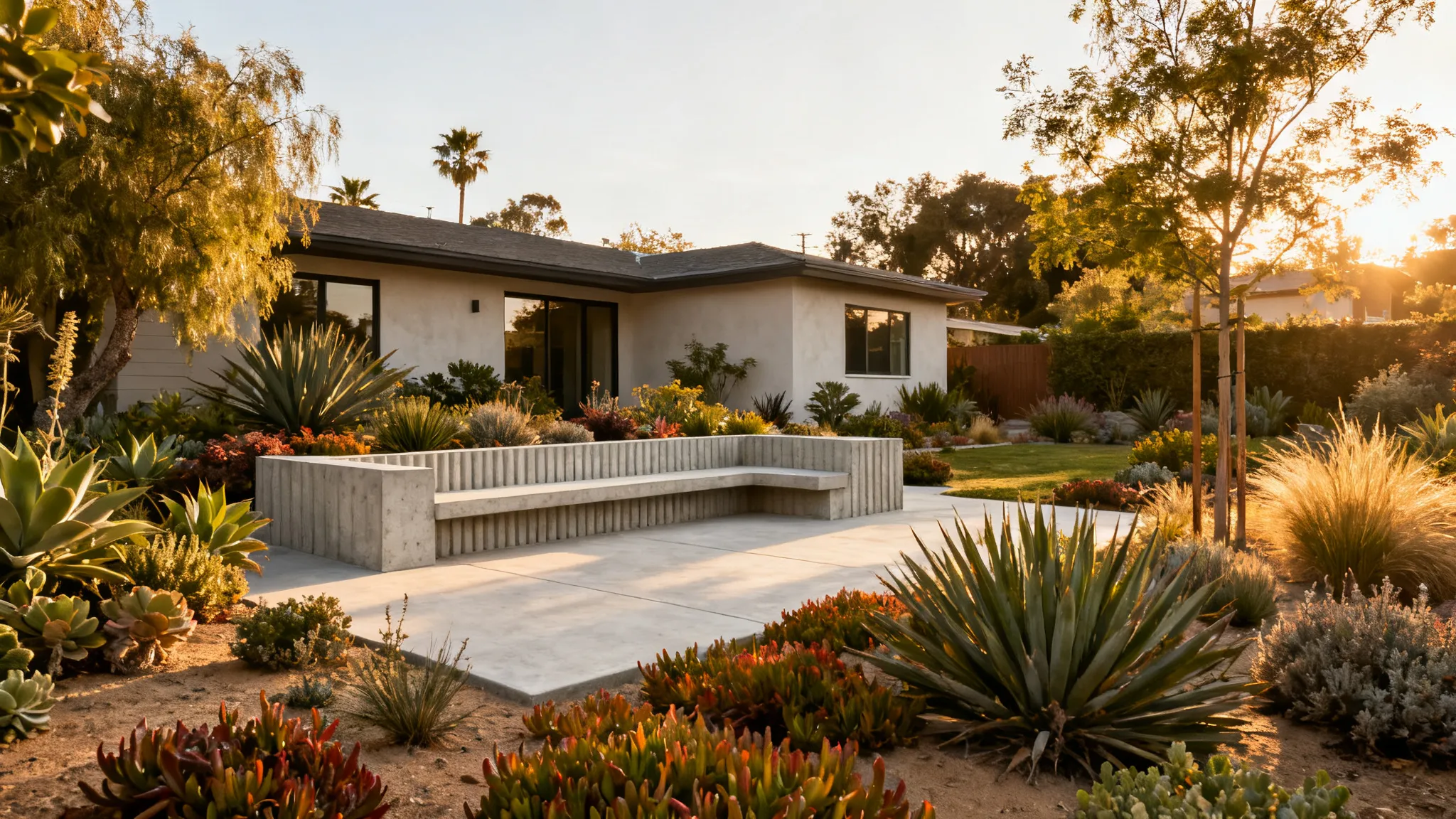
With long dry seasons, rising water costs, and periodic restrictions, drought-tolerant landscaping has gone from a nice-to-have to the smart default in Orange County. Done well, it is not a compromise — a thoughtfully designed low-water landscape looks richer and more interesting than a plain lawn, supports local wildlife, and costs far less to maintain.
Start with a plan, not a plant list
The biggest mistake is buying drought-tolerant plants without a design. A successful low-water landscape starts with how you use the space, then groups plants by water need (hydrozoning), shapes the grading so rain stays on site, and chooses materials that suit the coast or the warmer inland climate. The plants come last.
The best drought-tolerant plants for the OC
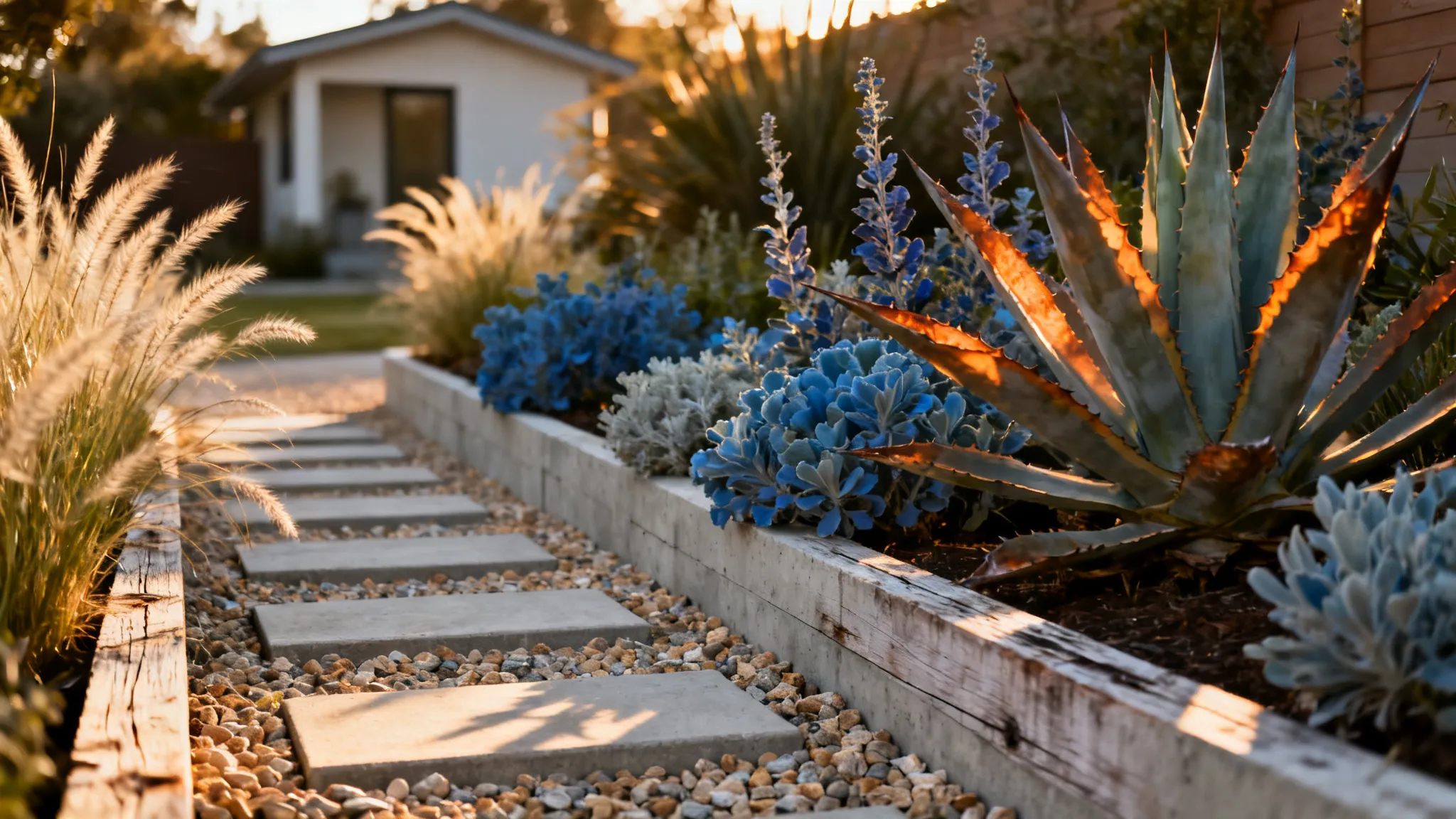
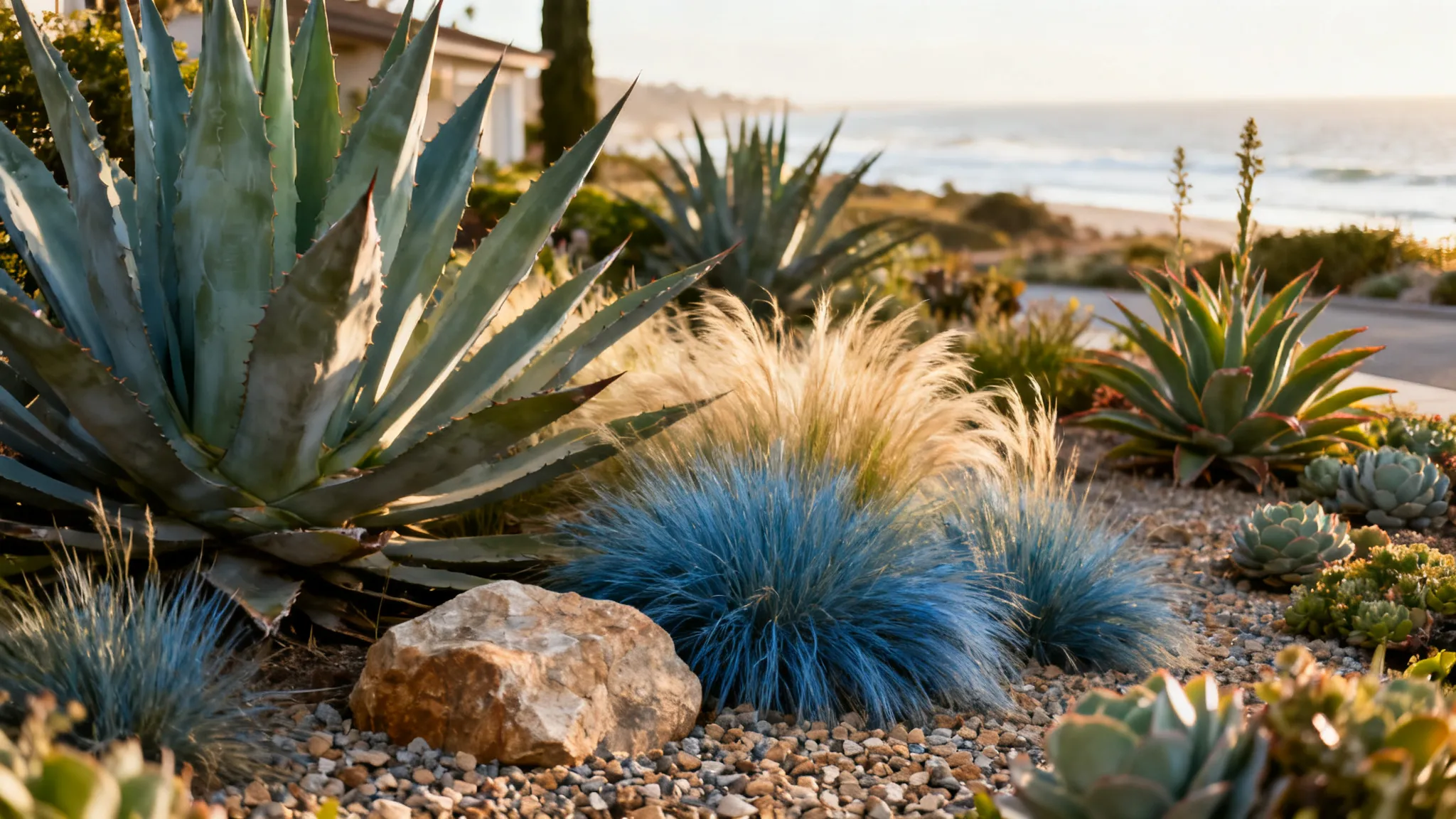
For structure, lean on succulents like agave and aloe. For color and pollinators, salvias, lavender, rockrose, and kangaroo paw bloom for months on little water. For an evergreen native backbone, ceanothus and manzanita are hard to beat. And for green underfoot, low-water groundcovers or quality synthetic turf replace thirsty lawn.
Irrigate efficiently
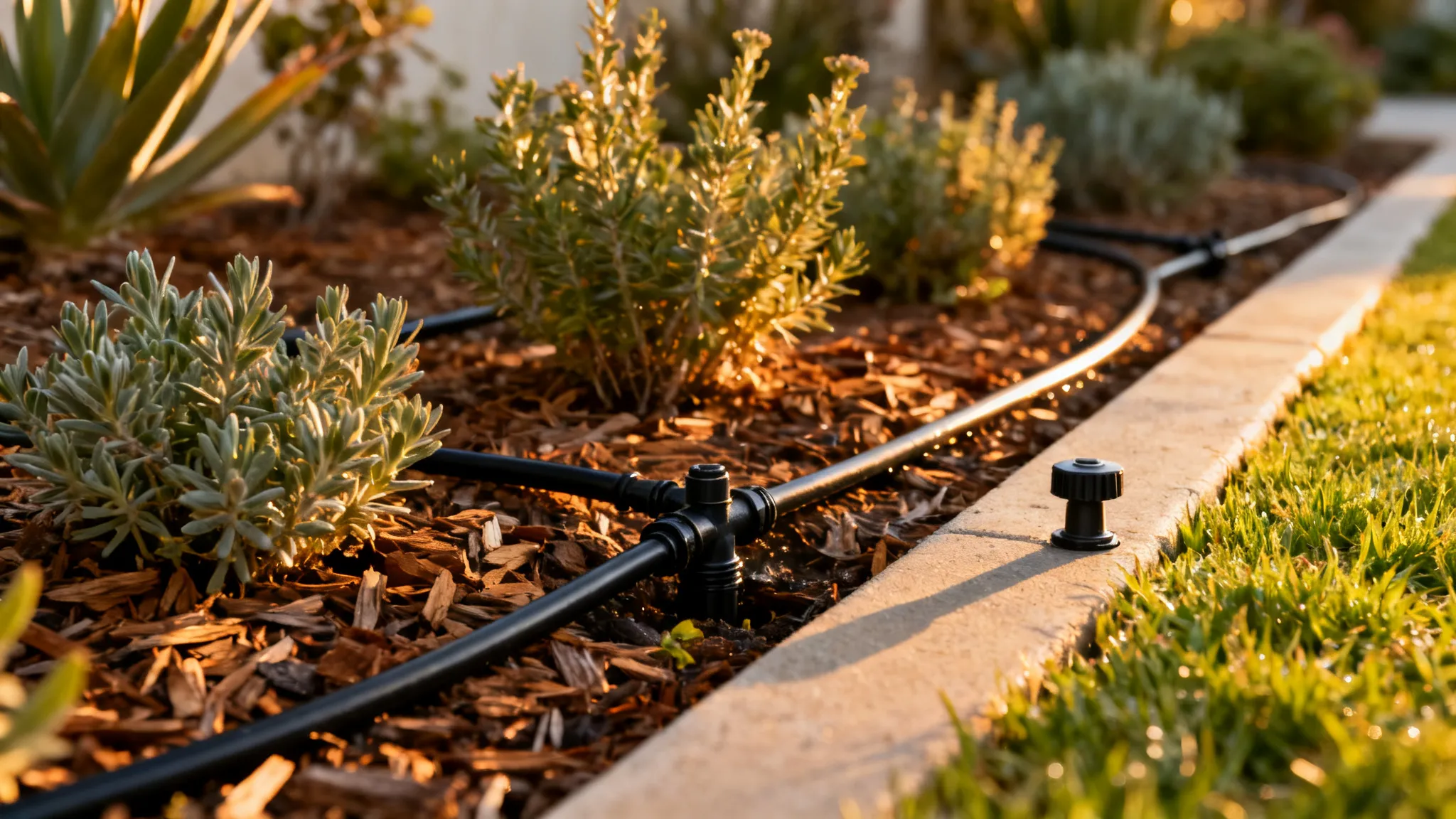
Pair the planting with drip irrigation and a smart, weather-based controller. Drip delivers water straight to the root zone with almost no waste, and a smart controller adjusts to the season automatically — together they are where the biggest water savings come from.
Mulch, soil, and permeable surfaces
Several inches of mulch retains moisture and suppresses weeds; healthy, amended soil holds water better; and permeable hardscape lets rain soak in instead of running off. These unglamorous details are what keep a low-water landscape thriving.
Design it once, enjoy it for years
A drought-tolerant landscape rewards good design with lower bills, less maintenance, and year-round beauty. We design and build water-wise landscapes throughout Orange County — see our drought-smart ideas, or get a free design consultation to plan yours.
Watch & Learn
No-Grass Front Yard Ideas: Drought-Tolerant Landscaping Tips
A clear explainer on the subject, from John & Bob's.
Frequently asked questions
How much water does drought-tolerant landscaping save?
A well-designed low-water landscape can cut outdoor water use by 20–50% according to the EPA. Since outdoor watering can be up to 60% of a home's total water use in a dry climate like ours, that is a meaningful drop in the bill.
Does drought-tolerant mean cactus and gravel?
Not at all. The palette includes colorful salvias and lavender, soft ornamental grasses, flowering natives like ceanothus, and sculptural succulents — layered for year-round structure and color. It looks lush, not barren.
What are the best drought-tolerant plants for Orange County?
Succulents (agave, aloe) for structure; salvias, lavender, and rockrose for color; California natives like ceanothus and manzanita for an evergreen backbone; and low-water groundcovers in place of thirsty lawn.
Is a drought-tolerant yard low-maintenance?
Generally yes — once established, climate-appropriate plants need little water and minimal care. Pairing them with drip irrigation, mulch, and good design keeps ongoing maintenance low.
Have a project in mind?
Get a free, no-obligation consultation with the All Seasons team.