Design & Ideas · June 1, 2026
Rain Gardens in Orange County: Turn Runoff Into a Beautiful, Water-Wise Feature (2026)
Updated June 1, 2026
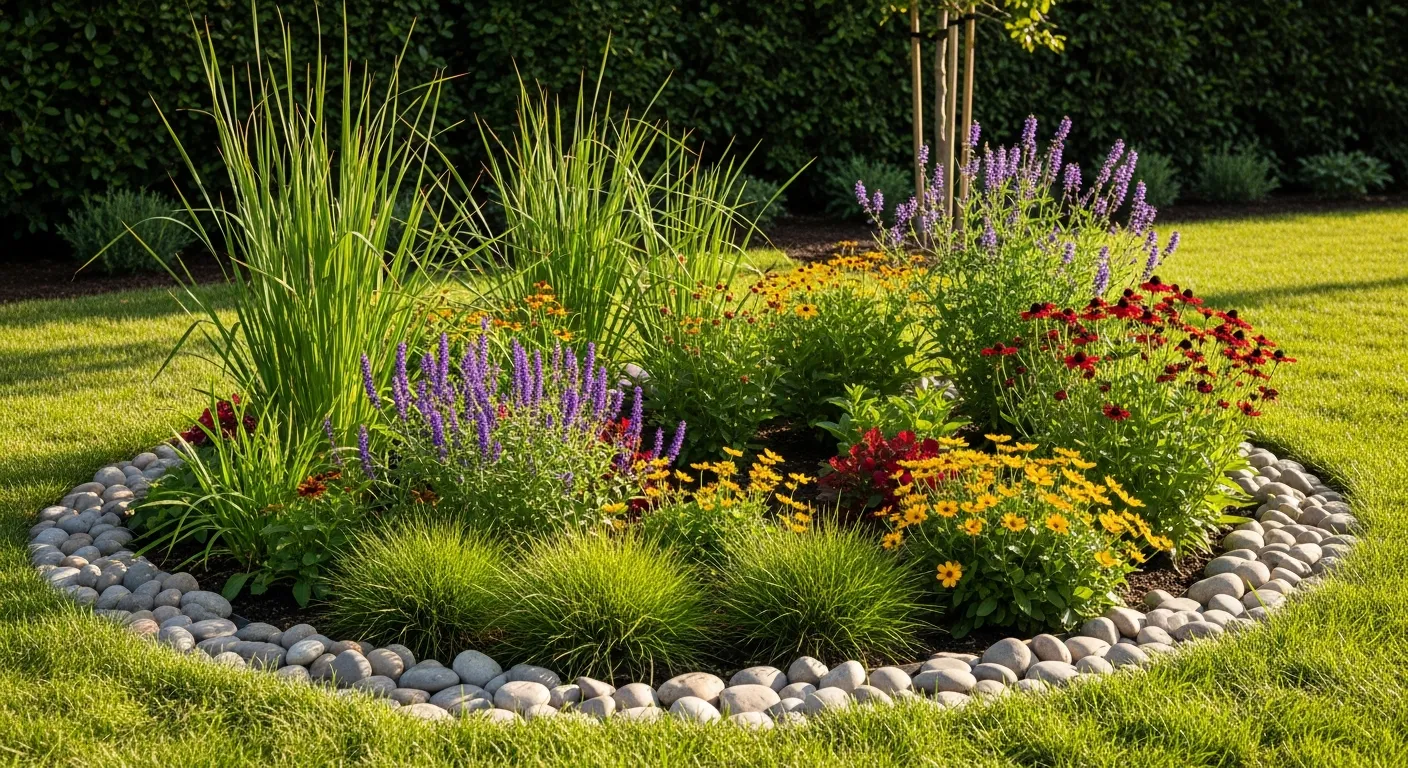
A rain garden captures the rain that would otherwise run off your roof and driveway, lets it soak back into the ground, and turns a soggy problem area into a lush, low-water planting feature. Here is how they work, how to build one right, and why they fit Orange County yards.
AI-generated audio summary. For the full detail, read on.
What is a rain garden?
A rain garden is a shallow, planted depression positioned to catch stormwater runoff — from a downspout, driveway, or low spot — and let it soak into the soil instead of sheeting across your yard or rushing to the street. It is planted with deep-rooted, water-tolerant species that can handle a brief soaking after a storm and a long dry stretch in between. Most of the year it simply looks like a lush, slightly sunken garden bed; during a storm it quietly does the work of a small detention basin.
How a rain garden works
The principle is simple: slow it down, spread it out, soak it in. Runoff is directed into the basin, where it ponds a few inches deep and then percolates into amended, fast-draining soil over the next day or two — never long enough to breed mosquitoes. As the water filters down, plant roots and soil capture sediment and pollutants before they reach the storm drain. The result is less runoff, cleaner water, and more moisture banked in your own soil instead of lost to the gutter.
Why rain gardens make sense in Orange County
Our rainfall is concentrated into a handful of intense winter storms, so a lot of water arrives fast and mostly runs off hard surfaces. A rain garden captures that burst, eases pressure on the yard and the storm system, and recharges the soil right where your plants can use it later in the dry season. It is the water-wise mindset our climate rewards — keep the rain you get — and it pairs beautifully with the drought-tolerant planting that already thrives here.
Rain garden or dry creek bed — which do you need?
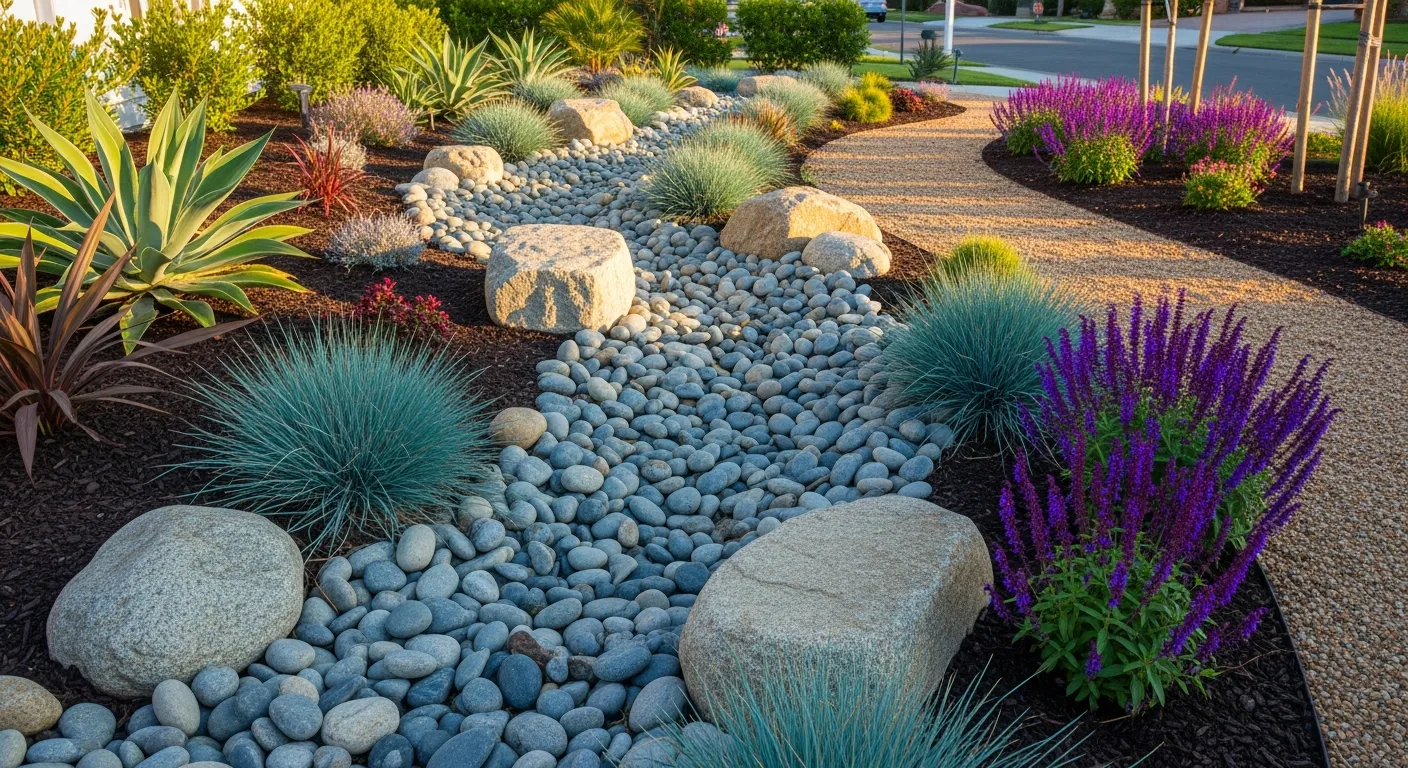
They are cousins, and the right choice depends on your goal. A dry creek bed is a channel that moves water across the yard to a safe outlet — ideal when you need to redirect flow or control erosion on a slope. A rain garden is a basin that holds and absorbs water in place — ideal when you want to soak runoff into the ground rather than send it somewhere else. Many of the best designs use both: a dry creek bed to carry water, ending in a rain garden that lets it soak in.
How to build a rain garden the right way
Siting and sizing make or break it. Place the garden at least about 15 feet from the house and downhill from the foundation, where runoff naturally flows but won’t threaten the structure. A good rule of thumb is to size the basin at roughly 20–30% of the area draining into it, dug 6–12 inches deep with a level bottom. Loosen and amend the soil so it drains within 24–48 hours — our sandy coastal soils are often ideal, while heavy clay needs more amendment or a different approach. Shape a gentle inlet (often fed by a dry creek bed or downspout) and a higher overflow outlet so extreme storms drain safely, then mulch and plant.
The best plants for an Orange County rain garden
Rain garden plants have to tolerate a wet basin briefly and dry conditions the rest of the time, so the planting is zoned: tougher, moisture-loving species like rushes, sedges, deergrass, and Pacific Coast iris in the wettest center, and drought-tolerant natives and Mediterranean plants — salvias, yarrow, ceanothus, grasses — on the higher edges. Choosing California natives also supports pollinators and keeps the whole feature water-wise once established.
Cost, maintenance, and getting started
Cost depends on size, soil amendment, and whether it ties into other drainage like a dry creek bed — a single downspout garden is a modest project, while a larger basin handling a whole roof is more involved. Maintenance is light: weed and mulch like any bed, clear the inlet of debris, and divide or replace plants over time. If you have a downspout that floods a bed, a low spot that stays soggy, or you simply want a lush, eco-friendly feature, a rain garden is worth considering. We have designed and built water-wise landscapes across Orange County since 1987, and every consultation includes a free, itemized estimate.
Watch & Learn
How to Build a Rain Garden
A clear explainer on the subject.
Frequently asked questions
Do rain gardens really reduce runoff and flooding?
Yes. A properly sized rain garden captures the first flush of stormwater from a roof or driveway and lets it soak into the ground instead of running off — easing localized flooding and reducing the load on storm drains. The EPA notes a rain garden can absorb roughly 30% more water than a conventional lawn.
Will a rain garden breed mosquitoes?
No — that is the most common myth. A correctly built rain garden is designed to drain within 24 to 48 hours, far faster than the several days mosquitoes need to breed. If water lingers longer than that, the soil needs more amendment or better drainage, which we address in the build.
Where should a rain garden go in my yard?
Site it where runoff naturally flows — below a downspout or at a low point — at least about 15 feet from the house and downhill from the foundation, never over a septic system or in a spot that already stays wet. Full or partial sun is ideal for the planting.
How big should a rain garden be?
A common rule of thumb is to size the basin at about 20–30% of the area draining into it, dug roughly 6–12 inches deep with a level bottom. The exact size depends on your soil’s drainage rate and how much roof or paving feeds it — we calculate it for your specific site.
What plants work best in a rain garden?
Use zoned planting: moisture-tolerant species like rushes, sedges, deergrass, and Pacific Coast iris in the wet center, and drought-tolerant natives such as salvias, yarrow, and ornamental grasses on the drier edges. California natives keep it water-wise and support pollinators.
How much does a rain garden cost in Orange County?
It depends on size, how much soil amendment the site needs, and whether it connects to other drainage like a dry creek bed. A single-downspout garden is a modest project; a larger basin is more involved. We provide a free, itemized estimate after assessing your site.
Have a project in mind?
Get a free, no-obligation consultation with the All Seasons team.